DeSert Moon Entertainment
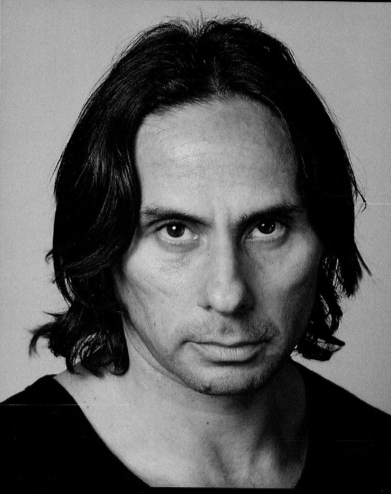
About Christopher DeCannett
Christopher DeCannett is a writer, director, and producer whose filmmaking career shaped a significant era of independent Hollywood cinema. Active from 1993 to 2004/2005, Christopher created a diverse portfolio of over ten independent films, serving as both director and producer on each project. His creative work also extended to the stage, where he wrote, directed, and produced two original plays.A graduate of UCLA Film School, Christopher built a reputation for his immersive, hands-on approach to storytelling, guiding every project from early concept to final cut. His films are known for their character-driven narratives, independent spirit, and willingness to explore unconventional themes.Though now retired from filmmaking, Christopher remains passionate about the art of cinema. His appreciation for storytelling continues to influence his life, and his body of work stands as a testament to more than a decade of creativity in the independent film world.Filmography... Written, Directed, and Produced By Christopher DeCannett
FEATURE FILMS
1997 Mother, No More Sausage Hot Beach Productions Writer, Director, Producer
1991 Desert Bliss Desert Moon Entertainment Writer, Director, Producer
2000 Nephew Julian Desert Moon Entertainment Writer, Director, Producer
2001 Retardaire Extraordinaire Desert Moon Entertainment Writer, Director, Producer
2002 Senator Fitzgerald Desert Moon Entertainment Writer, Director, Producer
2004 Enlightened Path Desert Moon Entertainment Writer, Director, Producer
2005 Lotto Winners Desert Moon Entertainment Writer, Director, Producer
2006 Owen Twins Desert Moon Entertainment Writer, Director, Producer
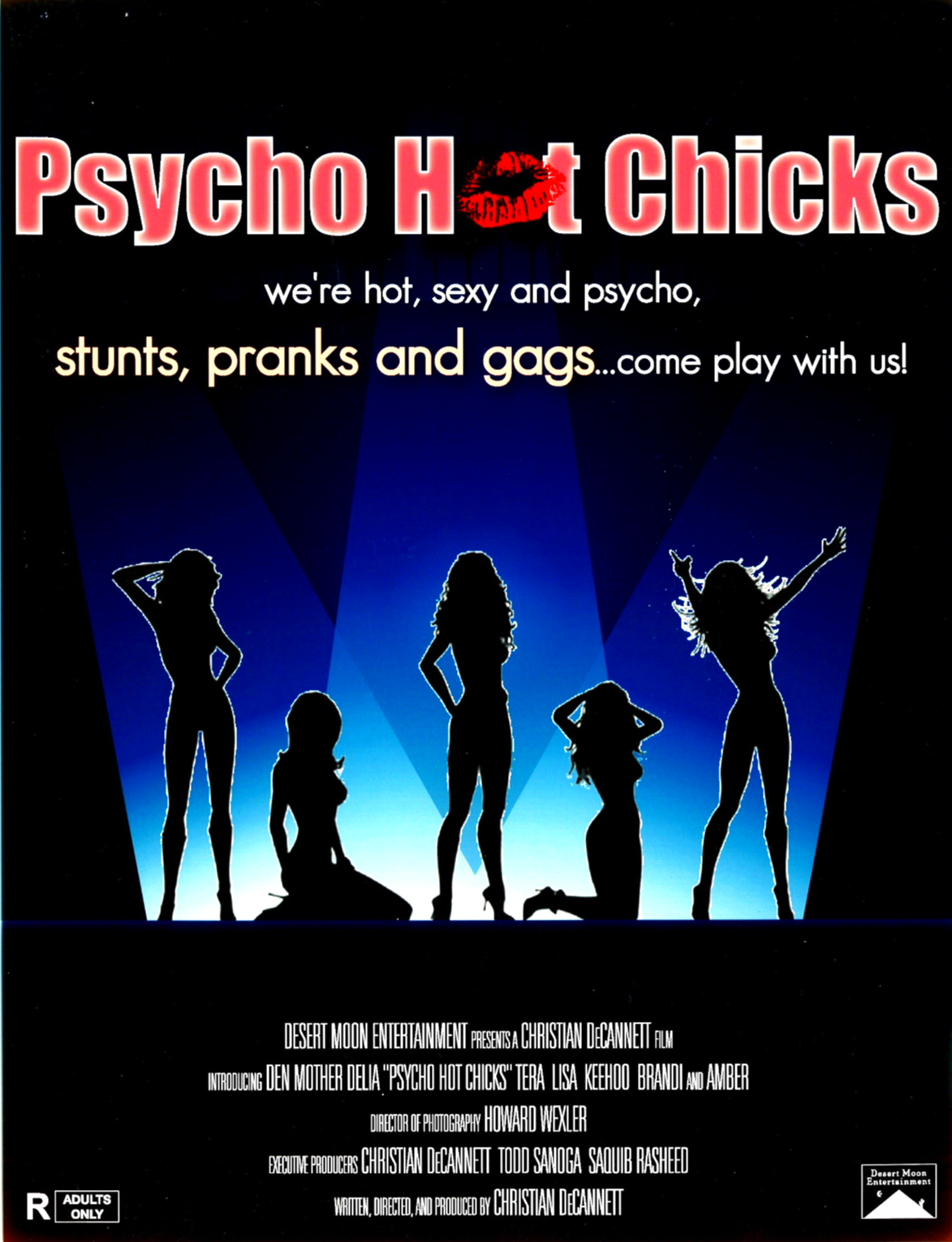
2007 Psycho Hot Chicks Desert Moon Entertainment Writer, Director, Producer
2007 Psycho Fat Chicks Desert Moon Entertainment Writer, Director, Producer
2007 Psycho Midgets Desert Moon Entertainment Writer, Director, Producer
2008 Freaks on a Plane Desert Moon Entertainment Writer, Director, Producer
2008 The Crystal Meth Rush Desert Moon Entertainment Writer, Director, Producer
SHORT FILMS
1994 Flaming Dentist Umbrella Hot Beach Productions Writer, Director, Producer
1995 Message on the Mirror Hot Beach Productions Writer, Director, Producer
1996 The Machine Head Family Hot Beach Productions Writer, Director, Producer
1996 The McMillan Family Hot Beach Productions Writer, Director, Producer
THEATER
1994 The Roomates Hot Beach Productions Playwrite, Director, Producer
1997 Love Not Forgotten Desert Moon Entertainment Playwrite, Director, Producer
MOTION PICTURE DISTRIBUTION
Distribution is the process by which films are sold or licensed. Licensing is the right to exhibit or show a film for a set numberof years to theatrical, video, pay-per-view outlets, and pay and basic cable franchises, network television and syndicatedtelevision stations around the world. The world is divided into two distinctively different marketplaces. The "domestic"marketplace is the United States and Canada, and the "foreign" marketplace is the rest of the world.
All films are sold or licensed to the various buyers within these two territories. The marketplaces break down into the"theatrical" and the "ancillary" rights. Theatrical rights simply refers to any film that is exhibited in a walk-in or drive-intheater. At the end of 1999, there were 29,731 theater screens in the United States and Canada. This is an increaseof approximately forty percent since the mid-eighties and more than fifty percent since the mid-seventies. Despite themany ups and downs in the industry, the theatrical distribution side of the industry has continued to prosper. Althoughmost foreign countries have theaters, they are in limited number, thus their largest source of film revenues is fromtelevision licensing agreements and to a lesser extent, video sales . Ancillary rights refer to all other viewing venuesother than theaters. These include videotapes, laser discs, digital videodiscs, pay-per-view outlets, pay and basiccable franchises, network television and syndicated television stations, as well as merchandising.
Desert Moon Entertainment knows that it is imperative that the production entity fully understands the distribution (sales)potential of a film before it is made. The Company knows that today, international sales of independent films account forsixty to seventy percent of a film's total sales.
Desert Moon Entertainment will make its choices of which films to produce based upon the expertise of its principals andconsultants in the sales and distribution area. The Company knows that entertainment properties have to be madeaccording to the conditions of the marketplace. This is obviously the best way to minimize the risks and maximize theprofits.
Releasing a Studio Film Theatrically
Each major studio will release twenty to twenty-five films in the coming year. All have their own "in-house" distributiondivision, and is some cases, own or partially own their own theater chain. Therefore, any and all distribution andmarketing decisions are made within the company. Each studio will create and send out their own promotional andadvertising materials, arrange screenings and make all their own foreign distribution deals. At the end of a film'stheatrical run, the film is sold to the ancillary markets of video stores, pay-per-view outlets, pay and basic cablefranchises, network television and syndicated television stations.
Releasing An Independent Film Theatrically
The majority of domestic sales for independent films come from the ancillary markets discussed earlier. A studiomay determine that an independently produced film has the potential to be a theatrical hit. The studio then buysthe negative of the film from the independent company and incurs all the costs to market and distribute the filminto theaters in the United States and Canada. This is called a "negative pick-up deal". The sale price can behigh (2 to 10 million dollars) and the money is paid in full upon delivery of the film. Many independentcompanies screen their films for the studios for just this reason. In 1996 the independent film "Sling Blade”,produced for one million dollars, was bought by Miramax Films for roughly 10 million dollars. Miramax Filmstheatrical distribution of the film grossed almost $24.5 million dollars.
As of today, Miramax Films has made over twenty million dollars in net profits with more profits yet to be determined. This was a financial bonanza for the independent film company as well as for Miramax Films. This is one of thereasons why the risk to reward factor is now so favorable for independent film companies. This is also why manyindependent film companies are now concentrating on producing the smaller, more personal films that have provento be so popular with the films going public of the nineties. "Brothers McMullen", "Boys Don't Cry" and, "Fargo" arejust a small sample of these types of films. They were all produced on very modest budgets but fit the tastes oftoday's audiences.
Because of this, the chances for greater profits will always exist for an independent film company. It should
also be noted that a films' total receipts are dictated by its domestic theatrical release. The more successful the domestic box-office is, the greater the value of ancillary rights. This can be a big financial gain to an independent filmcompany's bottom line.
Another common scenario is a domestic distribution company (Lions Gate Films or New Line Cinema) may decide tofinance the prints and the ad campaigns for an independent film. In return, the domestic distribution company wouldreceive 25 to 50 percent of the domestic theatrical and ancillary profits in addition to recouping its expenses. This wouldallow the independent company to retain the remaining percentage of the domestic rights and all of the foreign rights.
Two independent production companies achieved prominence and financial clout with the success of one such film inthis manner: Carolco Pictures with "Rambo", and Golden Harvest with "Teenage Mutant Ninja Turtles". These moviesbecame franchise-type films that produce sequel after sequel and eventually developed into an animation television series. Just one such project can make an independent company exceptionally profitable.
Pre-selling An Independent Film Foreign
Pre-Sales is the sales practice that involves the selling of the rights to a film not yet made. All independentcompanies sell and/or pre-sell their films at the American Film Market in Los Angeles, the Cannes Film Festivalin France and the MIFED Market in Italy. The only requirement to pre-sell a film is a script, the film's artwork (onesheet or poster) and a cast list. With a poster and a "name" actor attached and a script, a foreign sales companycan "pre-sell" the film to key foreign territories. The foreign buyer will pay up to 20% of the value of the licensingagreement as a deposit to guarantee them certain media rights (theatrical, video, pay-per-view outlets, etc.) intheir territory when the film is completed and ready for delivery. At the time of delivery, the buyer pays theremaining 80% of the balance of the contract. This contract acts as a "letter of credit" that is bankable at banks in theUnited States that do business in the entertainment industry. The moneys raised from the pre sale contract can covera large percentage of the cost of the film.
This technique of pre-selling can also be applied to the domestic market. In this scenario, however, there are no film marketexpenses. All that is necessary is to call the theatrical and ancillary distribution companies in the United States andnegotiate the pre-sales contract. After the pre-sales are completed, the remaining revenues come from the film's domesticand foreign territories that were extended in the pre-sales agreements.
Releasing an Independent Film Foreign
The relationship between the distribution division of an independent film company and the foreign buyer is obviously avitally important one. It will make a big difference in the sales and or pre-sales of a film. If the distribution division hasexperience in prior dealings with foreign buyers, then the distributor will be able to garner the maximum amounts in salesor pre-sale prices.
Desert Moon Entertainment's foreign distribution division will sell the foreign rights to all of its films. In this way, Desert MoonEntertainment will also be able to participate in the pre-selling practices that, as discussed, are so beneficial to anindependent film company.
In the event that Desert Moon Entertainment creates its own distribution division, the company could immediatelybegin receiving income with minimal capital outlay. This comes by way of Desert Moon Entertainment distributingother filmmakers' films. Desert Moon Entertainment's distribution division may charge the filmmaker a fee of thirtypercent of all monies collected on his/her film. The filmmaker would also be charged an additional $75,000 to$130,000 dollars to cover the marketing a acquisition costs of his/her film. Desert Moon Entertainment would be "infirst position" to collect its monies.
This results in Desert Moon Entertainment being the first in the chain to be paid. Desert Moon Entertainment could thereforehave a minimal degree of risk in regard to this endeavor . These monies could be used to help offset part of Desert MoonEntertainment's annual overhead expenses. In some cases, these films could in the end belong to Desert MoonEntertainment in perpetuity and essentially becoming part of its film library.
Another advantage to Desert Moon Entertainment selling its own films is that as a distribution company, it can utilizean entertainment industry bank to help "gap finance" film productions. This is done as receivable financing basedupon the pre-sale letters of credit given by the domestic and foreign buyers. This enables the company to reduce itscapital risk, and therefore increase production per year and utilize its finances in more resourceful ways. Oneconsideration is by co-producing a larger budgeted film with other reputable independent film companies and anotherway is by utilizing prints and advertising (P & A) co-venture, and then either self-financing a theatrical release or renton of the major studio's distribution entity. If the film is successful at the box-office, then the greater the value is of theancillary rights as discussed earlier.
Yet another way is by providing completion funds to filmmakers that don't have enough money to complete his/her film.Desert Money Entertainment takes a major ownership position as well as the distribution profits earned by selling film.
The Studio vs. the Independent
The entertainment industry, as in other consumer-based enterprises, depends upon the sales (licensing) of its product. Forthe purpose of this prospectus, the product we are talking about is the selling and exploitation of intellectual properties .These properties will be licensed (sold) to, but not limited to, theatres, video stores, pay per-view outlets, pay and basiccable franchises, network television and syndicated television stations around the world.
Manufacturers of entertainment properties can be divided into two categories: the "studio" and the "independent"companies. Desert Moon Entertainment is an "independent" as opposed to a "studio" company. Most people arefamiliar with studios. They are Twentieth Century Fox, Universal Pictures, Paramount Pictures, Warner Bros. Pictures,Walt Disney Pictures/Buena Vista Studios, Sony Entertainment/Columbia Pictures/Tri-Star Pictures, MGM/UA, NBC,ABC, and CBS as well as "mini-majors" such as New Line Cinema, Castle Rock Entertainment, HBO, SHOWTIME,and Artisan Entertainment. In recent years, the difference between the two has become less divided.
For example, while the basic function of film production is the same for both studio and independent films, the amount of money needed to make an independent film is considerably less. Both are shown in theaters and sold to the same auxiliarymarkets (video stores, pay-per-view outlets, etc.}, yet at a difference in cost. The studios will spend large amounts ofmoney on their films because they HAVE TO. They are contracted to use union labor and employ a multitude of vice-presidents and executives to oversee their vast holdings as well as associates, secretaries, maintenance people, etc.
The studios also have the cost of the many development deals they have with actors, producers, writers, anddirectors. The studios spend millions of dollars on these development deals of which only a few will result ina produced film. This approach has cost the studios in one specific area. Where the studios previously releasedthirty to forty films per year, today they are releasing only twenty to twenty-five films per year and financing onlytwelve to fifteen of those films with the remainder made-up of co-productions or joint ventures ("Titanic", "Air ForceOne", "Brave heart", etc.) and acquisitions. Consequently, this reduction in the number of films made by the studioshas created a gap in the marketplace.
Both the independent and the studio film go through development, pre-production, production, and post production. Inthe case of independently produced films there are significant differences. Firstly, the independent film requires only afew people as opposed to the vast numbers of people required for a studio film. It is also much easier for the executivebranch of the "independent" film company to maintain control over all the creative and monetary aspects of the film.Fewer people mean less paperwork and lower costs resulting in an upside profit potential.
Secondly, the budget for the independently produced film is anywhere from $500,000 dollars to $5 million to
$10 million dollars as opposed to the studio's average budgeted film of $40 million dollars.
Thirdly, an independent company can act faster than a studio when it comes to putting a "timely" film into production. Anindependent film can be in production within three months. On the other hand, a studio film can take years before an idea orscreenplay can make it through the maze of decision-making executives. So, when a current event or widely publicizednews story occurs, the independent company can almost always beat the studio to the punch when it comes to hitting themarketplace with a related product.
One of the big differences between the two is that the amount of money needed for full recoupment for the independentcompany in only a fraction of that of the studio. Therefore, the expectations of an independent film are much smaller. There isless risk with the independent film but the same or even higher (because of the smaller expense) reward. One need only look at the accompanying chart of independent film box office and their cost to revenue ratios to show what Desert MoonEntertainment already knows: that the worldwide film paying public will embrace high-quality motion picture entertainmentregardless of its source or cost.
Over the last several years many entrepreneurs have seen this as a great profit-making opportunity by financing smaller "independent" film companies. These "independent" companies require much less capital than the studios butthey are still capable just like the studios of producing a hit.